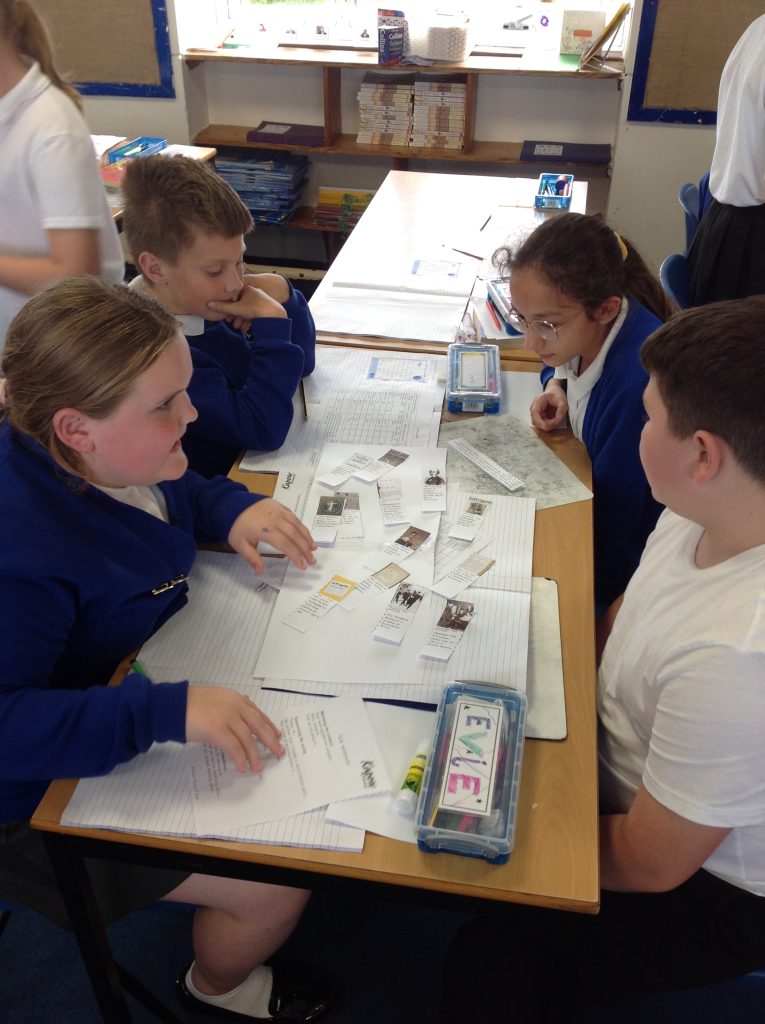
'We were all delighted with your wonderful children, how good they were and how well they participated.'
School Visitor
INTENT
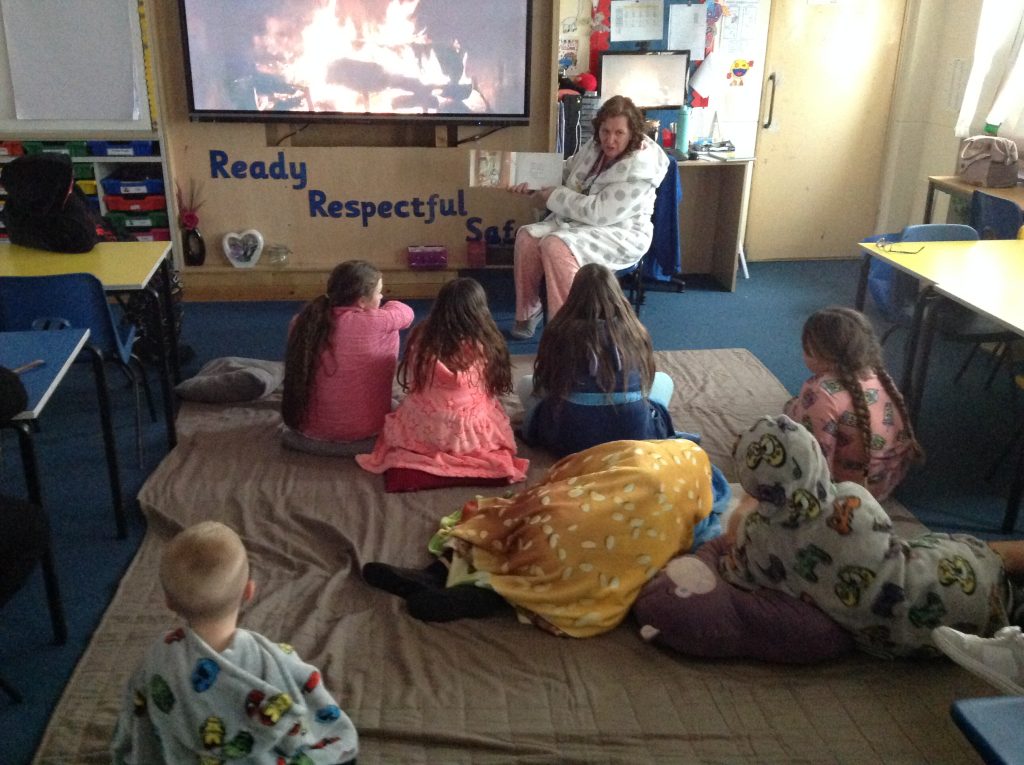
The aim of our English Curriculum is to enable all children to communicate effectively through spoken and written language. We want all children to be fluent, confident readers by the time they get to Year 6, who are able to make valid choices for their own personal reading. We believe in the importance of high-quality teaching of phonics to enable every child to read. Our English Curriculum is designed to give all children the opportunity to become competent writers, who can express themselves clearly, coherently and creatively within various genres and writing purposes. We aim for all children to have clear understanding of the structure and grammar needed to construct accurate sentences. We aim for all children to communicate clearly and confidently using their improving vocabulary to articulate their thoughts, feelings and learning, not just in English but in all areas of the curriculum.
IMPLEMENTATION
Our English Curriculum follows the 2014 National Curriculum through our bespoke structured English Spine using high-quality texts linked to the wider curriculum.
Speaking & Listening:
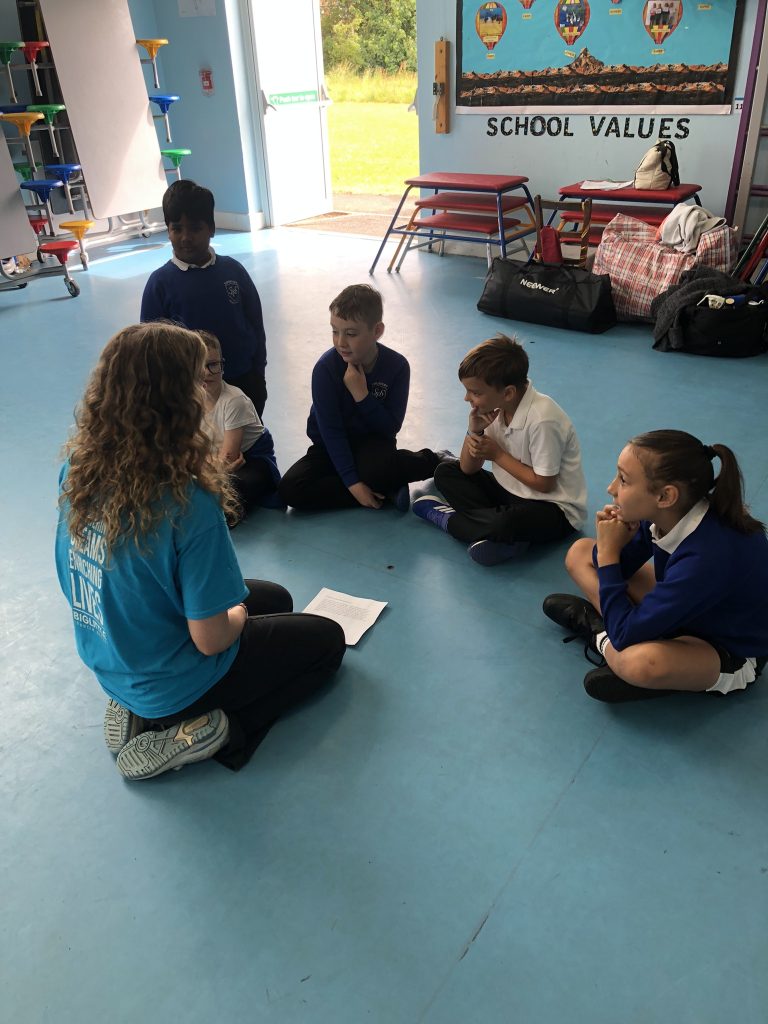
At Somerford Primary School, developing strong spoken language skills is a priority. Pupils are taught to adapt their speaking style to suit different audiences and purposes, with regular opportunities for speaking and listening through debates, discussions, drama, and role-play. These skills are reinforced across all subjects, and children are encouraged to verbalise their ideas before writing, as demonstrated by teacher modelling. We place great emphasis on the development of vocabulary across the whole school. This starts with learning new words through singing songs and recalling nursery rhymes in Reception and continues to develop through daily recall of Tier 2 vocabulary from Y1 – Y6.
Reading:
We use the Read Write Inc. (RWI) phonics programme from Reception, teaching children to decode sounds and spell tricky words, aiming for quick reading progress. Children up to Year 2 are grouped by reading level for targeted instruction, with ongoing assessments to adjust groups or provide extra support. Children in Y3-6 engage in whole-class reading using diverse materials and the SWIPER (Sequence and Summarise, Word Meaning and Choice, Infer and Interpret, Predict, Explain and Respond and Retrieval) approach to develop comprehension skills. We promote proficient reading through a vibrant library of books, reading displays, and events like Book Bingo and World Book Day. Reading fluency is assessed regularly, with 90 words per minute as a fluency goal.
Writing:
Early writing at the school starts with mark-making and development of fine motor skills. Children’s language, motor skills and early writing are further developed in Reception through Drawing Club sessions. Correct letter formation is taught through RWI phonics, progressing from CVC words to short sentences. From Years 1 to 6, children build strong foundations in punctuation and grammar via Place Value of Punctuation and Grammar (PVPG) lessons, with ongoing assessment for learning guiding progress. Writing units focus first on non-narrative skills, then on high-quality texts that develop comprehension, grammar, and writing for purpose and audience, supported by teacher and peer feedback. The school fosters a language-rich environment emphasizing ambitious vocabulary through Knowledge Organisers and working walls. Spelling is taught using the No Nonsense Spelling scheme for children in Y2 – Y6 and Spellzone is used as an online platform to develop individualised spelling programmes based on needs. Skills from English are integrated across the curriculum providing opportunities for writing in different areas such as diary writing in history and explanations in science.
In all areas of the English Curriculum teachers deliver lessons using the Gradual Release of Responsibility model. The ‘I do, We do, You do’ approach provides a clearly structured framework for children to learn the concepts being taught via modelling, scaffolding and independent learning along with opportunities for spaced retrieval to enable children to retain and apply their learning over time. During lessons, teachers and support staff will identify children who are demonstrating misconceptions or inaccuracies and support those children to reduce the barriers to their learning, particularly for children with additional needs.
Our English curriculum is designed to be inclusive and accessible, supporting learners with Special Educational Needs and Disabilities (SEND) to develop essential literacy and communication skills. Lessons are tailored to individual strengths and needs, using a variety of resources and strategies to engage and inspire. We focus on building confidence in reading, writing, and speaking, fostering creativity, and ensuring every learner can achieve their potential in a supportive and nurturing environment.
IMPACT