
'We were all delighted with your wonderful children, how good they were and how well they participated.'
School Visitor
INTENT
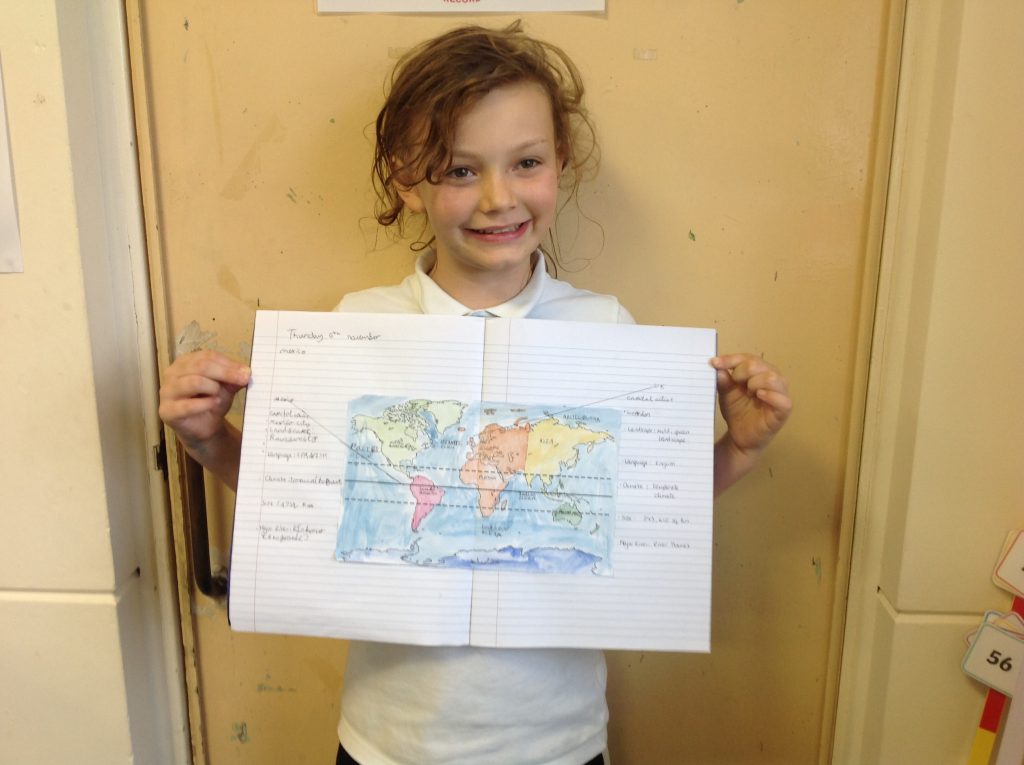
We want all our children to learn through our Geography curriculum to be curious about the world, places and people around them. We want all pupils to be able to investigate geographic principles and concepts to draw conclusions about their world. The geography curriculum is sequenced to provide pupils with opportunities to build and revisit knowledge as they progress through the school. Being a primary school in an urban setting, we provide opportunities for pupils to experience geography learning beyond the school gates and further afield. For example, year 1 visit the seaside to explore how the coast differs from an urban environment and year 6 visit a local river to practise mapping and investigate sediment. Rooted in our school values—Enjoy, Achieve, Aspire—it promotes critical thinking, questioning, and analysis of geographical principles.
Through our chosen scheme, pupils learn about their local communities and what the local geographical features are, so that they can then compare and contrast these to other communities, both in the UK and in other parts of the world as well. By doing so, children are able to link knowledge and understanding from their own communities to other parts of the world. Allowing them to deepen their understanding of the world around them.
We introduce key themes such as weather, urban and rural communities, coasts, mountains, forests before moving to more challenging concepts such as how the land is used and impact of humans upon the natural world as children move into upper KS2. The scheme aligns with National Curriculum goals, supporting EYFS learners through Development Matters and Early Learning Goals, and laying strong foundations for future learning Geography.
IMPLEMENTATION
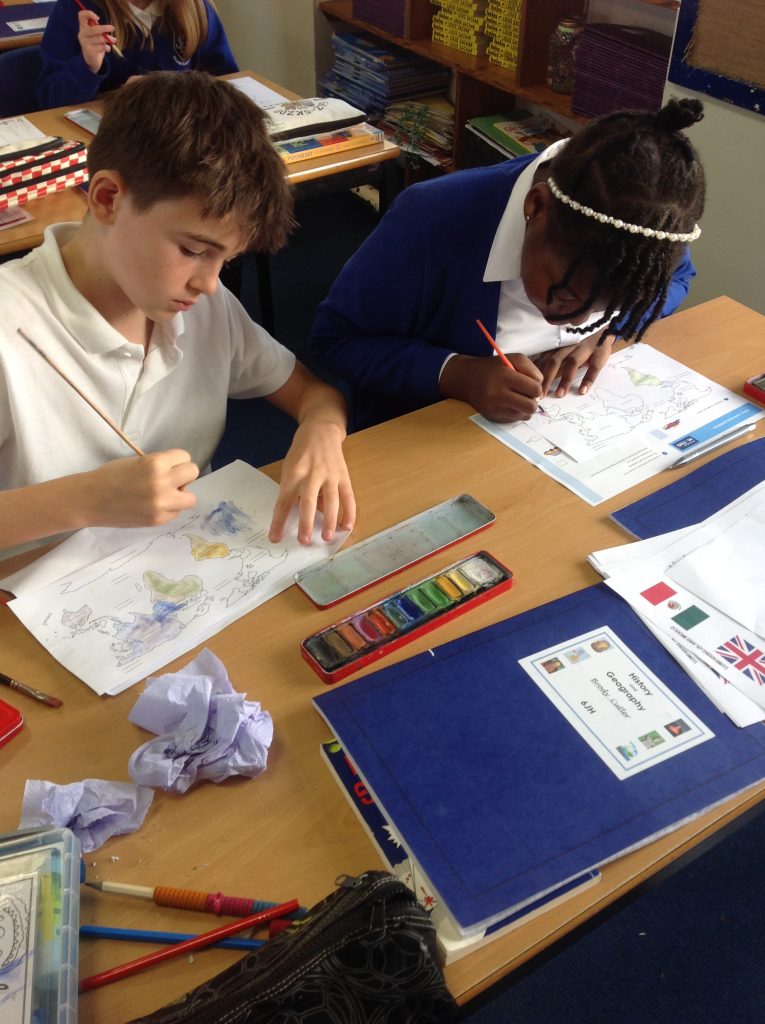
At Somerford we have adopted Twinkl Primary’s Scheme of work.
Each six-lesson unit has a focus on a Key Concept, linked to the National Curriculum that allows children to develop their understanding of key geographical concepts and to allow them to make comparisons with other parts of the world. In EYFS, children explore the concept of Geography by exploring and experiencing key experiences from their local community, helping them understand the important aspects of their community. Children further develop their awareness of Geography in Key stage 1 and will start to develop understanding of maps, atlases and other secondary sources of information, as well as comparing these with their own field research experiences. This will support children in building a their understanding of geographic processes and concepts which they can then refer to throughout their learning in Key stage 2.
Our lessons are delivered using the ‘I do, we do, you do’ approach allowing children to obtain geographic key knowledge. Within the scheme guidance is given on how to adapt the teaching to ensure that learning can be accessed by all learners. Key words are taught explicitly in sessions to ensure a progression of Geography vocabulary. Teachers use assessment for learning strategies throughout lessons and spaced practice and retrieval throughout units and subsequent units to ensure key knowledge is embedded. Knowledge organisers for each unit support pupils in building a foundation of factual knowledge by encouraging recall of key facts, concepts and vocabulary.
IMPACT
The impact of Twinkl Primary’s scheme can be constantly monitored through both formative and summative assessment opportunities. Each lesson includes guidance to support teachers in assessing pupils against the learning objectives. Furthermore, each unit has a skill catcher and knowledge assessment quiz which can be used at the end of the unit to provide a summative assessment.
Children will enter secondary education with a range of skills to enable them to succeed. They will be enquiring learners who ask questions about Geography and can make suggestions about how to conduct field research or explore secondary evidence sources to answer Geography question. They will be critical and analytical thinkers who are able to make informed and balanced judgements based on their knowledge of the world around them. They will leave Somerford with essential knowledge encompassing the Geography of both their local community and that of the wider world, preparing them for success in adulthood as a result.